
- 1. Executive Summary
- 2. The Hidden Operational Costs: Why Bollard Strategy Matters
- 3. Product Ecosystem Deep Dive
- 4. Regulatory Alignment and Compliance in the Republic of Ireland
- 4.3 Reducing secondary hazards
- 5. Installation, Maintenance and Lifecycle Planning
- 6. Sector-Specific Use Cases Across Irish Industry
- 7. Strategic ROI and Comparison Frameworks
- 7.1 Flexible recovery bollards vs rigid steel bollards
- 7.2 Sleeved impact posts vs painted steel posts
- 7.3 Stainless bollards vs galvanised bollards for public-facing zones
- 7.4 Indicative decision by operational risk
- 7A. Common Specification Mistakes in Irish Projects
- 7A.1 Treating visual presence as proof of protection
- 7A.2 Over-specifying rigidity in poor substrates
- 7A.3 Using one bollard type everywhere
- 7A.4 Ignoring the maintenance team’s reality
- 7A.5 Confusing frontage design with loading-bay design
- 7A.6 Treating installation as a commodity task
- 8A. A Practical Specification Workflow for Multi-Site Irish Operators
- 8. Buying Guide and Decision Framework
- 8.1 What type of vehicle interaction is credible?
- 8.2 Is the aim deterrence, protection, recoverability or presentation?
- 8.3 What is the substrate condition?
- 8.4 What is the maintenance model?
- 8.5 Is visibility part of the safety brief?
- 8.6 Does the environment have hygiene or presentation sensitivity?
- 8.7 Is retrofit speed important?
- 8.8 Is there a future-proofing case for a higher class of bollard?
- 9. Future Trends in Irish Facility Protection
- 10. Conclusion
1. Executive Summary
Irish businesses are under growing pressure to make workplace transport, asset protection and public-facing infrastructure more resilient. The Health and Safety Authority (HSA) treats workplace transport as a broad category covering vehicles and mobile plant operating within workplace boundaries, including cars, vans, HGVs and forklift trucks. The statutory baseline is also clear: under Section 8 of the Safety, Health and Welfare at Work Act 2005, employers must ensure, so far as is reasonably practicable, the safety, health and welfare at work of employees. In practical terms, that duty reaches far beyond forklift training or painted floor lines. It includes the design of traffic routes, the segregation of pedestrians and vehicles, the management of loading bays and service yards, and the protection of structures and people where collisions are foreseeable.
That is where bollards stop being “small hardware” and become strategic infrastructure. In many Irish facilities, bollards sit at the interface between moving vehicles and vulnerable assets: dock doors, roller shutters, racking uprights, structural columns, EV chargers, pedestrian crossing points, plant rooms, facades, shopfront glazing, refrigeration plant, and customer-facing forecourts. When specified badly, they can transfer impact into the slab, crack concrete, create awkward trip edges, damage forklifts, or become repeated repaint-and-replace liabilities. When specified well, they help control energy, reduce downstream repair costs, improve route legibility, support traffic management plans, and protect both the asset and the operating environment.
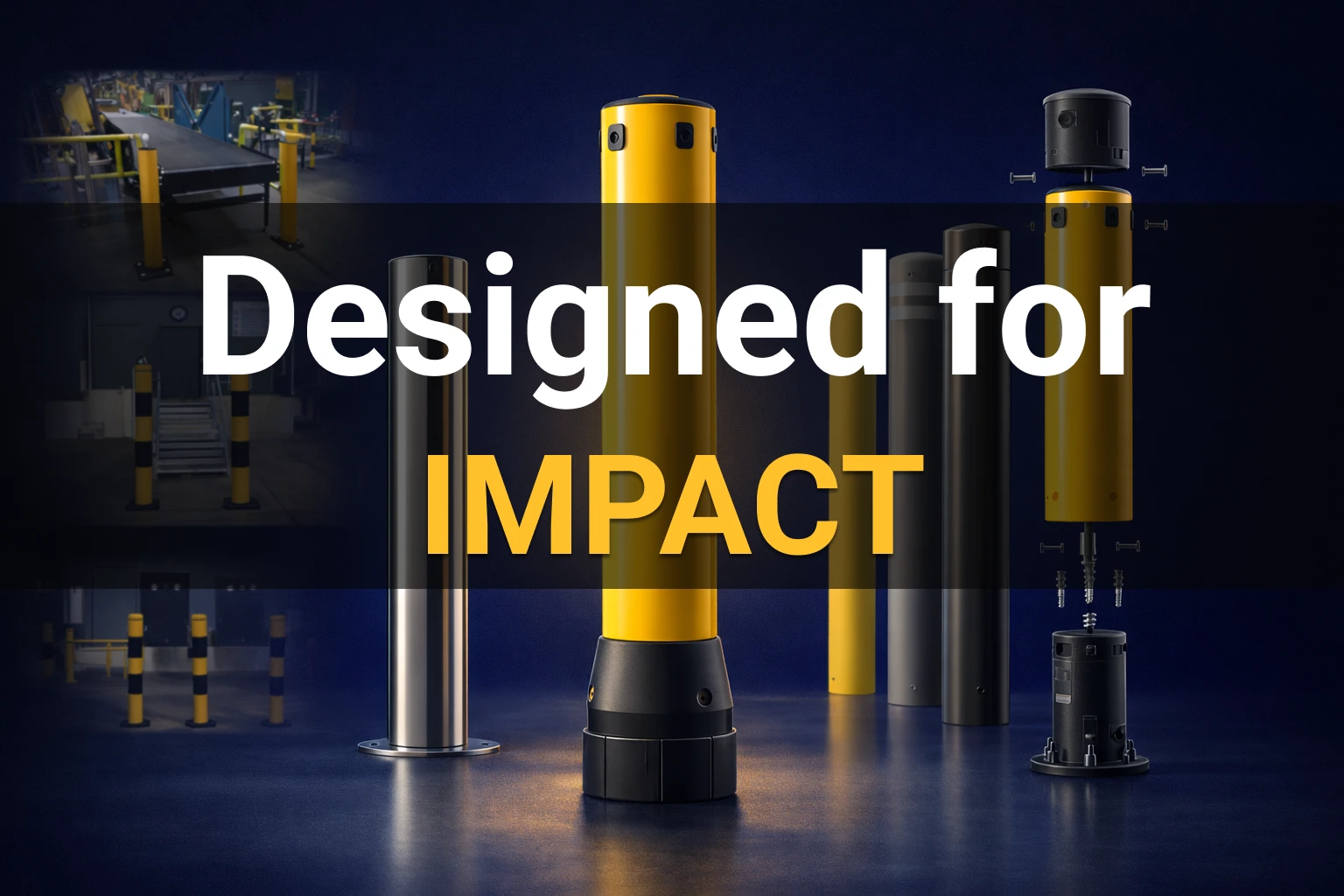
This article takes a technical and strategic look at SVL’s Safety Bollard Post category in the Republic of Ireland, covering all eight listed products: Bollards, Flex+ Bollard, Flexcore Bollard, Galvanised Bollard, Impact Safe Post, Safestop Bollard 15, Service Yard Impact SAFE Bollard, and Stainless Steel Bollard. Rather than repeating entry-level content about “why bollards matter”, the focus here is on the angles often missed in generic guides: material choice, impact energy management, anchor strategy, slab preservation, maintenance burden, aesthetic performance, and total cost of ownership.
The category itself reveals a useful truth about the Irish market. There is no single “best bollard”. A service yard exposed to repeated trailer encroachment does not need the same solution as a hospital entrance, a pharmacy dispatch area, a multi-site retailer, or a warehouse rack end. Rigid galvanised steel, stainless architectural posts, polymer-sleeved impact posts, and shock-absorbing elastomer-steel hybrids all play different roles. SVL’s range is therefore best understood as a decision system, not a catalogue: a set of engineered options that allow Irish facilities managers, H&S leads and procurement teams to match the bollard to the kinetic risk, the substrate, the visual environment and the maintenance budget.
Another reason this matters now is that recent HSA guidance continues to emphasise risk assessment, documented traffic management, and segregation of pedestrians from vehicles. The HSA’s workplace transport risk assessment guidance advises employers to segregate vehicles and pedestrians as soon as they enter the workplace, make pedestrian-only or vehicle-only areas, consider one-way systems, and document the traffic management system on a site map. The 2025 HSA Code of Practice for the Safe Use of Industrial Trucks goes further, stating that pedestrians and vehicles should be segregated to the greatest extent, that routes should be clearly defined and marked, and that physical barriers should be provided wherever possible to separate pedestrian activities from areas where industrial trucks operate. Bollards are not the whole answer to those duties, but they are often one of the most practical engineering controls for implementing them.
A content-gap review of SVL’s existing public articles also shows why a deeper bollard article is justified. Existing SVL content already covers broad warehouse safety, workplace transport tips, car-park safety systems, and the wider impact-protection market in Ireland. What is less developed is the selection logic inside the bollard family itself: when rigid steel is preferable to impact recovery; when a polymer sleeve is more valuable than paint; when a hidden-hardware bollard justifies its extra capital cost; when stainless steel adds value beyond aesthetics; and how different bollard types map to Irish sectors such as logistics, retail, healthcare, hospitality and manufacturing. That is the gap this article fills.
At a strategic level, the conclusion is straightforward. Industry leaders in Ireland increasingly need to think of bollards as part of a layered workplace transport architecture. Flexible bollards absorb and recover from impact in active industrial zones. Heavy-duty protected posts help preserve service-yard geometry and loading-bay assets. Galvanised steel remains useful where budget discipline and basic physical deterrence matter most. Stainless steel supports clean, public-facing or hygiene-sensitive environments. The best return on investment does not come from buying the strongest-looking post. It comes from choosing the right failure mode for the environment.
2. The Hidden Operational Costs: Why Bollard Strategy Matters
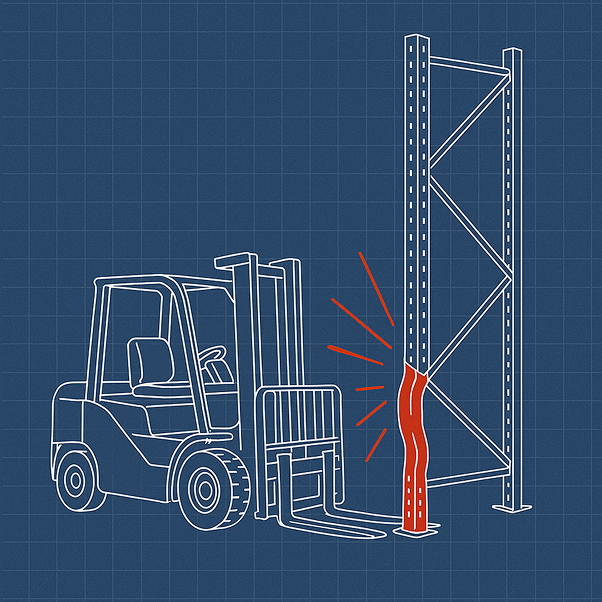
Many Irish sites still approach bollards reactively. A door frame gets struck. A corner of racking is clipped. A shutter guide is bent. A façade receives damage from a reversing van. Only then does a bollard appear. This pattern feels cost-conscious, but it is usually a false economy. The real cost of under-specified or absent bollard protection is cumulative, indirect and often poorly captured in maintenance budgets.
The first hidden cost is asset damage multiplication. A single low-speed impact in a warehouse or yard rarely damages only one thing. A forklift can strike a post, which transmits force into the anchor set, the baseplate, the slab edge, and the adjacent asset. A rigid post may remain standing while the concrete around it fails. The visible post therefore appears “durable”, yet the site inherits a more expensive civil or structural repair. This is precisely why modern flexible or energy-managing bollards are gaining ground: they are designed to change how the system fails, not merely whether the post topples.
The second hidden cost is downtime and disruption. HSA workplace transport guidance makes clear that the working environment is one of the three pillars of transport safety, alongside the vehicle and the driver. If an incident damages a dock approach, traffic route, equipment base, roller door reveal or utility zone, the repair window can interrupt goods-in/goods-out operations, restrict pedestrian circulation, and trigger temporary workarounds that introduce new risks. In distribution centres and manufacturing plants, even minor infrastructure repairs can have outsized operational consequences when they occur near racking aisles, dispatch zones or production support areas.
The third hidden cost is maintenance drag. Traditional painted steel posts often become recurring maintenance items: chipped coating, surface corrosion, cosmetic degradation, and frequent repainting in high-contact areas. Several products in SVL’s bollard range answer this directly. The Impact Safe Post and Service Yard Impact SAFE Bollard both stress low maintenance and “no need to repaint”, while polymer sleeves and rotating covers help preserve appearance after contact. For multi-site operators, that matters. What looks like a small line-item at one site can become a sizeable annual burden across a national estate.
The fourth hidden cost is route ambiguity. The HSA’s risk-assessment sheet recommends segregating vehicles and pedestrians, considering one-way systems, marking routes on a site map, and enforcing speed limits. Poorly chosen or poorly placed bollards can undermine that objective. Thin visual delineators may help a car park read more clearly, but they are not substitutes for impact-rated protection in a forklift zone. Conversely, oversized steel posts in customer-facing areas can create visual clutter, vehicle scuffing and poor manoeuvrability where a more elegant stainless or lower-impact solution is more appropriate. In other words, the wrong bollard is not only a cost problem; it is an information design problem.
The fifth hidden cost is compliance narrative failure. Irish regulators and insurers look for evidence of risk assessment, control measures and maintained systems, not improvised responses after an incident. The 2025 HSA industrial trucks code says the risk assessment for truck operations should include the identification of risks, protective and preventive measures, and arrangements for segregating industrial trucks from pedestrians. A site with repeated strike marks on vulnerable assets but no engineered protection looks unmanaged. By contrast, a site that uses appropriately selected bollards, physical barriers and defined crossings presents a more credible safety system.
The sixth hidden cost is misallocated capital. Some buyers overspend on rigid “heavy-duty” steel where the real need is recoverability. Others underspend on lightweight delineation posts in environments where forklift or pallet-truck contact is routine. The right way to evaluate bollard spend is not “price per post” but total cost of ownership (TCO) across five dimensions:
- Initial procurement and installation
- Consequence of impact to surrounding assets
- Frequency of replacement or cosmetic refurbishment
- Downtime associated with repair
- Usability and route clarity over time

This is where the structure of SVL’s range becomes commercially useful. It spans basic galvanised deterrence, architectural stainless presentation, flexible polymer-based protection, hybrid steel-and-elastomer energy management, and service-yard-focused heavy-duty posts. That breadth allows Irish buyers to avoid the common market failure of using the same bollard logic everywhere.
A final hidden cost, often underappreciated by senior management, is reputational quality. In retail parks, hospitality venues, healthcare campuses and office developments, bollards are highly visible pieces of street furniture. The stainless steel option explicitly targets that context, with Grade 304 satin finish as standard and Grade 316L available to order, plus alternative head and mounting options. A forecourt lined with rusting, chipped posts communicates neglect. A clean, consistent bollard strategy communicates control, safety and professionalism.
In short, bollards operate at the junction of safety, maintenance, civil engineering, customer experience and visual management. Treating them as commodity posts is one of the quickest ways to miss their real economic value.
3. Product Ecosystem Deep Dive
3.1 Bollards (Range Overview)
The top-level Bollards page on SVL functions less as a single product specification and more as a solution family overview. SVL states that it has “a range of bollard to suit most applications” and lists the following sub-types: Stainless steel Bollard, Plain Galvanised Bollard, Flexi Bollard, Bolt Down Bollard, Cast in / Potted Bollards, Removable Bollards, Fold Down Bollards, Service Yard Bollard, Industrial Bollard. That is strategically important because it frames bollards as an application-led category rather than a one-size-fits-all item.
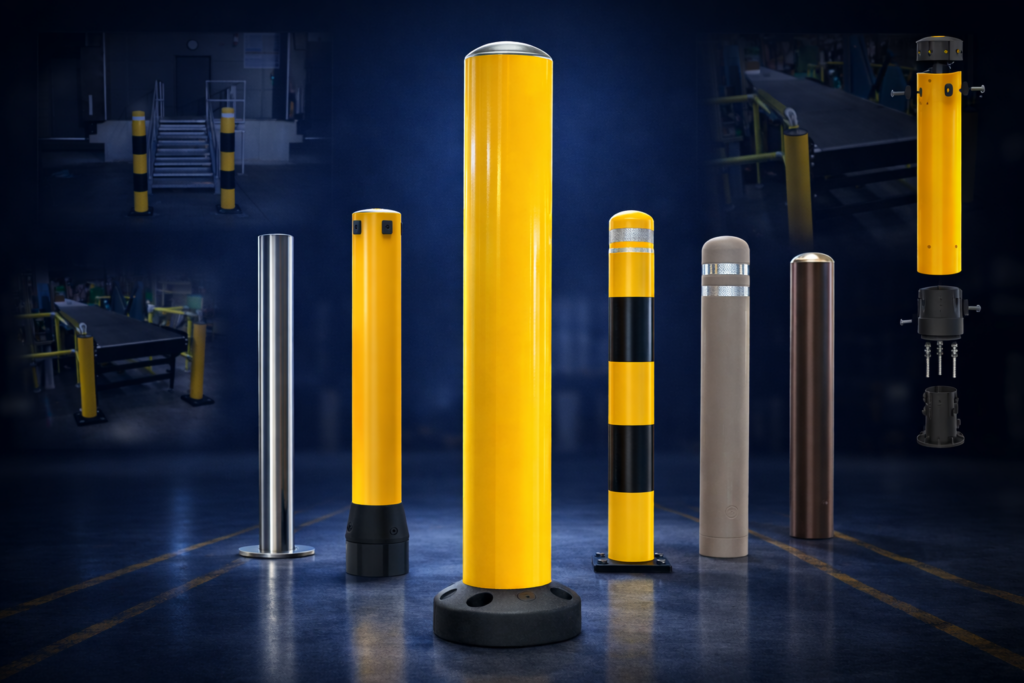
From a technical research perspective, this page exposes a useful content gap in the wider market. Many suppliers present bollards in narrow silos such as “parking bollards”, “stainless bollards” or “flexible delineators”. SVL’s top-level page instead implies a more consultative classification based on use-case and mounting logic. That matters for Irish buyers because the primary decision is rarely colour or diameter. It is usually a combination of these questions:
- Is the bollard meant to stop, deflect, warn, or recover?
- Is the environment public-facing, industrial, or mixed-use?
- Is the substrate robust enough for repeated rigid loading?
- Is cosmetic finish part of the brief?
- Will the bollard be struck by cars, forklifts, pallet trucks, or HGV-related manoeuvres?
- Does the site require removable or fold-down access control in addition to fixed protection?
The value of the range overview, then, is that it encourages facilities teams to move beyond generic procurement language. Instead of asking for “some yellow bollards”, they can begin to specify by risk type: impact recovery for internal industrial routes, heavy-duty protected posts for service yards, stainless options for customer approach zones, and cost-efficient galvanised protection where basic deterrence and weather resistance are sufficient.
The page does not give dimensions or test data, so it should not be treated as a standalone specification source. Its role is conceptual. It tells Irish buyers that bollard procurement should be handled as a selection exercise within a family, not a simple purchase of identical posts.
3.2 Flex+ Bollard
The Flex+ Bollard is one of the clearest examples in the range of a modern industrial bollard designed around energy management rather than brute rigidity. SVL describes it as a high-performance industrial safety bollard for warehouses, manufacturing facilities, distribution centres, loading areas and service yards, engineered to absorb impact, flex under force and return to shape. That language matters because it shifts the design objective from “remaining rigid” to “controlling collision energy”.
Technical anatomy
The product combines a durable polymer exterior with a PolyCore base. This is a classic hybrid logic. The outer polymer layer provides impact resistance, protects internal components from debris, and preserves a cleaner external profile. The PolyCore base anchors the system securely while contributing structural stability. The outcome is a bollard that is neither a simple hollow plastic post nor a plain steel tube. It is a composite system intended to deform in a controlled way under load.
This design has several practical implications in Irish warehouse and logistics settings:
- A polymer-clad or enclosed profile generally reduces surface chipping and the need for repainting compared with painted steel.
- Flex under impact can reduce the likelihood of transmitting peak force directly into the floor slab or adjacent asset.
- A closed profile can be easier to keep visually presentable in dusty or high-traffic environments.
SVL also states that the bollard is surface mounted using four anchors and requires no coring. That makes it operationally attractive for retrofits. In active facilities, avoiding coring reduces dust, wet works, cure-time complications and disruption around live traffic routes.
Core capabilities
The strongest technical differentiator disclosed on the page is the documented impact performance: 7,050 J upright energy absorption at 90°. Because that figure is explicitly stated on the source page, it is appropriate to reference it directly. It gives procurement teams a concrete basis for comparing this bollard against generic flexible posts that emphasise visibility but do not publish meaningful energy absorption data.
SVL positions the Flex+ for environments where contact from forklifts and pallet trucks is a real operational risk. That is a crucial distinction. Many low-cost flexible bollards in the wider market are intended mainly for traffic delineation in lighter-duty car-park or perimeter settings. The Flex+ is presented as an industrial protection device for sites where repeated low- to medium-energy contact is credible.
Differentiators
Compared with broad market offerings, a few distinctions stand out. Competing flexible-bollard pages commonly emphasise recyclability, easy installation, or suitability for roads and car parks. Those features are useful, but they do not always answer the industrial buyer’s main question: what happens to the floor, the asset and the post after a forklift strike? The Flex+ page answers that more directly through the language of impact absorption, return to form, polymer protection, and stated energy performance.
Best-fit scenarios
The Flex+ is especially well suited to:
- protecting door reveals and service entries inside distribution buildings;
- shielding racking ends or vulnerable equipment where a full guardrail is excessive;
- creating visible but recoverable protection around electrical cabinets or plant interfaces;
- supporting traffic-route clarity in mixed pallet-truck and pedestrian areas.
Its value is highest where impacts are possible and recurrent, but not of the same severity as service-yard vehicle incursions.
3.3 Flexcore Bollard
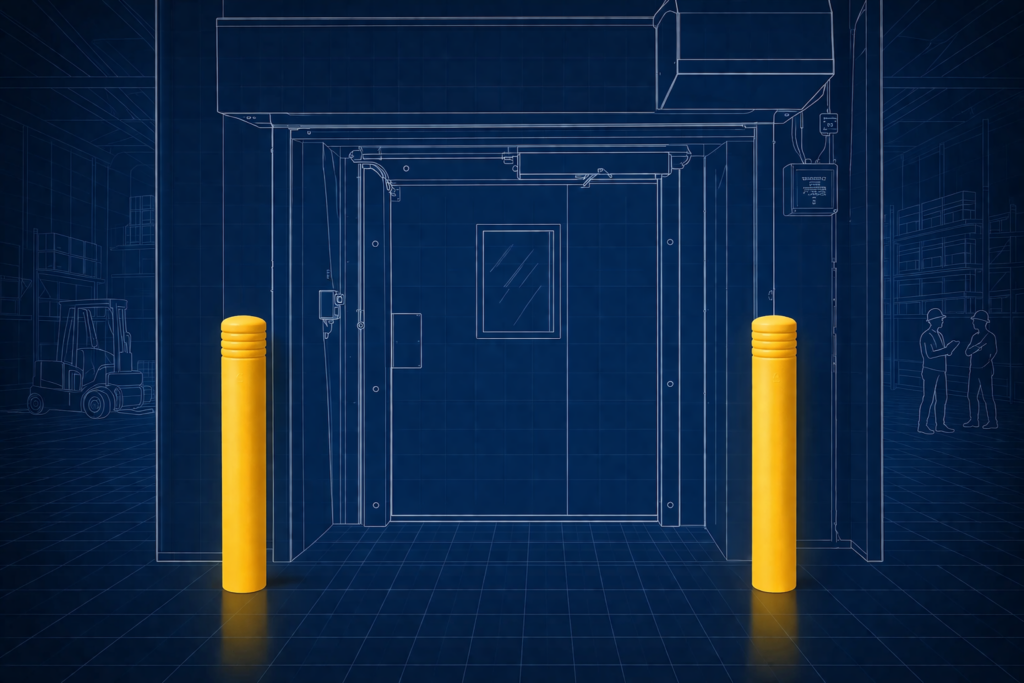
The Flexcore Bollard sits further up the engineering ladder. SVL describes it as being from the McCue range and engineered with patented shock-absorbing strength, using a high tensile steel core paired with industrial elastomers so that it deflects and absorbs impacts. It is explicitly contrasted with core-drilled or plate-mounted bollards.
Technical anatomy
This is a more structurally ambitious product than a standard flexible delineator. The combination of a steel core and industrial elastomers suggests a design intended to retain significant structural integrity while allowing controlled deflection. The elastomeric elements act as energy-management components, while the high-tensile steel core provides backbone and recovery. In practical terms, that means a bollard capable of withstanding tougher industrial abuse than purely lightweight flexible posts.
The product is also described as a bolt-down option with hidden hardware and three Hilti-approved concrete anchors, with installation taking 15 minutes. Hidden hardware is more than an aesthetic feature. It reduces exposed fastener vulnerability, improves cleanability, and lowers the chance of snagging or tampering in high-traffic environments. A three-anchor system, where properly engineered, also simplifies installation logistics.
SVL lists two size options: 4-inch version at 1370 mm high x 131 mm diameter, and 6-inch version at 1370 mm high x 182 mm diameter. That gives buyers a useful choice between a narrower and broader protection footprint without changing the overall height logic.
Core capabilities
The Flexcore’s real advantage is not just that it flexes. It is that it is designed to take the hit so floors — or operators — do not have to. That phrasing should not be over-literalised into a safety certification claim, but it does communicate the engineering intent: collision energy management that protects both infrastructure and people from the secondary consequences of rigid transfer.
For Irish warehouses, that matters wherever the slab edge, expansion joints, mezzanine interfaces, freezer-room thresholds or traffic pinch points make rigid impact transfer especially undesirable. A bollard that survives but destroys the concrete is often the wrong bollard.
Differentiators
A common weakness in the market is the gap between low-cost flexible posts and plain rigid steel. The Flexcore occupies the space in between with a more sophisticated mechanical philosophy. It offers:
- steel-core robustness rather than purely lightweight flexibility;
- elastomeric deflection rather than brittle rigidity;
- hidden hardware rather than exposed base fixings;
- rapid bolt-down installation rather than invasive coring;
- dimensional options suited to higher-visibility industrial settings.
This makes it particularly compelling for sites with frequent forklift interaction and a need to balance impact tolerance with slab preservation.
3.4 Galvanised Bollard
The Galvanised Bollard is the simplest and most budget-conscious steel option in the range. SVL is direct about the value proposition: when budget is the main focus, consider the plain galvanised bollard. There is no pretence here that this product replaces energy-managing hybrids. That transparency is a strength.
Technical anatomy
SVL describes the product as a CHS hollow tube with welded flat top cap, mounted on a circular base plate, standing 900 mm tall with a 114 mm diameter. This is classic straightforward steel bollard construction. The circular hollow section is widely used because it gives good all-round resistance, a familiar visual profile, and efficient fabrication.
The crucial material characteristic is the galvanised finish, described as helping protect from rusting in Irish weather. In the Republic of Ireland’s damp, often wind-driven, coastal or near-coastal climate, that matters. Galvanising remains one of the most cost-effective corrosion-control strategies for outdoor steel protection, especially where decorative finish is secondary to serviceability.
Core capabilities
This bollard is best understood as a basic physical deterrent and asset marker, not an advanced shock absorber. It bolts down easily to a solid concrete surface, with bolts not supplied as standard but available to order. That makes it accessible for straightforward installations in:
- car parks,
- warehouses,
- delivery yards,
- stockrooms,
- distribution centres.
Where the operational need is to define a keep-clear zone, protect a wall line from light vehicle encroachment, or provide a visible edge to vulnerable infrastructure at modest cost, the galvanised bollard remains highly relevant.
Differentiators
In a market full of painted mild-steel alternatives, the main differentiator here is not sophistication but practical durability per euro spent. The absence of decorative coating means there is less finish complexity. The galvanised layer is inherently aligned with Irish outdoor exposure. And the standardised 900 mm / 114 mm geometry makes the product easy to specify in basic protection schemes.
The limitation is equally clear: because the page does not present impact-testing data, elastomeric elements, rotating sleeves or energy-absorption claims, the prudent buyer should avoid treating this as a substitute for specialist industrial impact bollards in active forklift zones. Its strength is honest simplicity.
3.5 Impact Safe Post
The Impact Safe Post introduces a more advanced hybrid approach than the plain galvanised option. SVL describes it as a heavy-duty bollard offering ultimate protection against impact, with shock-absorbing rubber buffers, a yellow polyethylene rotating sleeve, black rubber top caps, and a hot-dip galvanised mild-steel core.
Technical anatomy
The product dimensions are explicit: 1000 mm height x 114 mm diameter, fabricated in mild steel using 114 mm circular hollow cores with a 180 mm x 180 mm baseplate. The steel element provides the structural body. Around that, SVL specifies a 123 mm diameter polyethylene rotating sleeve in Yellow RAL 1003 with black rubber top caps, plus a shock-absorbing rubber pad on top of the baseplate.
This layered assembly is technically interesting. The rotating sleeve concept changes the interaction at the point of contact. Instead of a painted steel surface taking abrasion directly, the outer sleeve can move relative to the strike, reducing scuffing and surface degradation while helping to manage friction. The rubber pad and buffers further suggest a design aimed at damping and arresting impact forces rather than simply resisting them.
The page also specifies an all-weather temperature range from -40 to +90°C. In Irish conditions, that indicates wide environmental robustness, including cold-store-adjacent settings and exposed yard locations.
Core capabilities
The Impact Safe Post’s key strengths are:
- heavy-duty protective intent;
- impact-force moderation via rubber buffering;
- reduced repaint requirements;
- galvanised steel durability beneath the sleeve system;
- bolt-down installation with suggested M12 x 100 mm fixings and four anchors.
This product is well matched to sites that want more resilience and lower cosmetic maintenance than a plain steel bollard, but do not necessarily need the higher-end geometry or test profile of products such as the Safestop Bollard 15.
Differentiators
The differentiator is the combination of galvanised structural steel plus sacrificial/functional sleeve technology. In the wider market, many entry-level posts are simply powder-coated steel or simple flexible plastics. The Impact Safe Post offers a more operationally mature proposition for Irish service zones, stockrooms and industrial perimeters: structural strength with a maintenance-conscious outer interface.
3.6 Safestop Bollard 15
The Safestop Bollard 15 is one of the most explicitly performance-led products in the category. SVL states that it uses a proprietary blend of synthetic elastomers and high strength steel, features hidden fixings, Hilti approved anchors, and has been in-house tested by McCue to withstand impacts up to 15,000 J.
Technical anatomy
This is a high-energy industrial bollard. The combination of high-strength steel and synthetic elastomers indicates a design intended to absorb substantial kinetic input while maintaining structural recoverability. The listed dimensions are 1219 mm high x 168 mm diameter, with a 333 mm footprint at the base. That wider base footprint hints at the engineering required to manage much higher impact loads.
Hidden fixings and a rubber base-plate cover improve both protection and housekeeping. Exposed anchors in industrial environments are vulnerable to corrosion, impact damage, debris accumulation and visual deterioration. A covered base is usually preferable where repeated pallet-truck or cleaning-machine movement occurs.
Core capabilities
The headline capability is the 15,000 J impact figure. That places this product in a distinctly different class from general-purpose flexible posts. It is designed for environments where strike energy is expected to be materially higher, such as:
- major forklift routes,
- distribution-centre interfaces,
- machinery perimeters,
- vulnerable building corners inside high-throughput facilities,
- industrial crossover points where a standard flex post would be underspecified.
The product also bolts down to a solid concrete surface using four anchors, which simplifies integration into existing facilities.
Differentiators
The main differentiator is not merely toughness but declared high-energy impact resistance combined with a relatively installation-friendly bolt-down format. In many markets, the choice is binary: either a cheap flexible delineator or a fabricated steel post. The Safestop Bollard 15 offers a third path: a purpose-built high-energy protection post with elastomeric shock handling and concealed anchorage.
That makes it particularly attractive when the cost of a strike is not limited to repainting. Where a collision could interrupt operations, damage structural interfaces, or endanger people in adjacent walkways, a higher-performance bollard can be rational on TCO grounds even if the upfront spend is higher.
3.7 Service Yard Impact SAFE Bollard
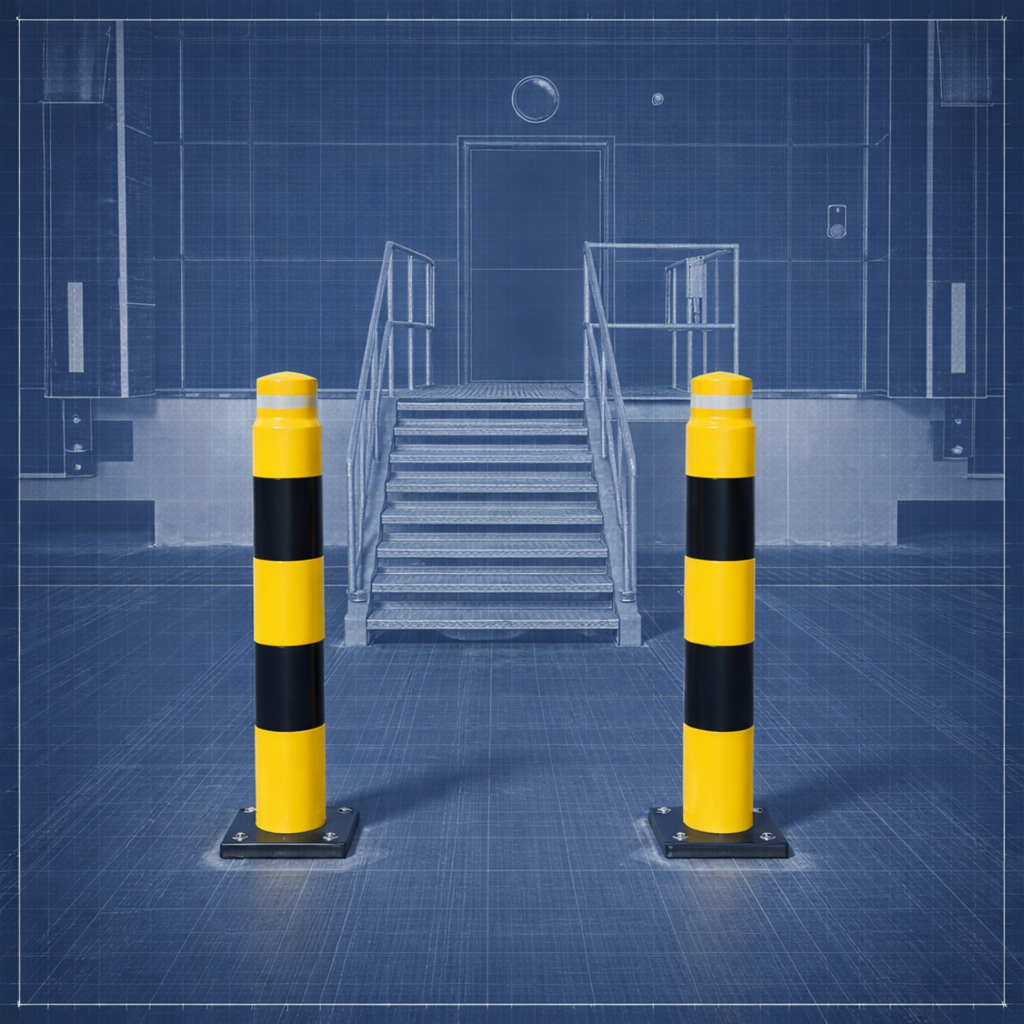
The Service Yard Impact SAFE Bollard is strongly application-specific, which is exactly what good industrial infrastructure should be. SVL describes it as a heavy-duty bollard for ultimate protection against impact, with shock-absorbing rubber buffers, flush-finish anti-trip floor anchors, polymer cover kits, and a 50 mm reflective band. It is also stated to be tested to PAS 13 code of practice and available in 1000 mm, 1300 mm and 1600 mm heights.
Technical anatomy
The service-yard focus changes the design priorities. In service yards and loading-bay approaches, bollards often need to do more than mark a boundary. They must remain legible to drivers, survive outdoor abuse, avoid creating unnecessary trip hazards near foot access, and accommodate visibility demands in darker or weather-exposed conditions. This product answers those needs through:
- anti-trip flush-finish anchors;
- snap-on slide-over polymer sleeve cover kits;
- reflective banding for visibility;
- multiple height options for different vehicle scales and sightline needs.
The anti-trip anchor detail is especially valuable. Service yards frequently involve mixed pedestrian and vehicle activity, awkward lighting, drainage channels, dock equipment and frequent walking between cabs, doors and dispatch points. Reducing protrusions around the base is a practical safety improvement.
Core capabilities
This bollard is designed to be easy to install on a solid concrete surface, with the polymer sleeve kits snapping into position. That speaks to operational ease as well as maintenance. Sleeved systems can allow faster cosmetic renewal than repainting, which is useful in harsh outdoor logistics environments.
The PAS 13 statement should be handled carefully. Because it appears explicitly on the product page, it can be referenced as a test/alignment statement for the product. However, it should not be inflated into a broader certification claim for an entire site. The correct framing is that the product is tested to PAS 13 code of practice and can therefore support Irish buyers seeking equipment aligned with recognised impact-protection practices.
Differentiators
In the broader market, many bollards sold into external settings prioritise either simple galvanised toughness or lightweight delineation. The Service Yard Impact SAFE Bollard distinguishes itself by being engineered around the specific realities of yards: visibility, outdoor durability, trip-conscious anchoring, and maintenance reduction.
This makes it highly relevant for:
- loading-bay flanks,
- dock equipment protection,
- service-yard pedestrian thresholds,
- vehicle-route edges near dispatch doors,
- logistics sites where reflective visibility is important.
3.8 Stainless Steel Bollard
The Stainless Steel Bollard serves a different strategic purpose from the yellow industrial posts in the range. SVL describes it as ideal for street furniture, giving a clean, crisp aesthetic to the front of a building, with options including potted / cast in, semi dome top, sliced or mitred top. The standard material is Grade 304 stainless steel with satin finish, while Grade 316L is available to order on request.
Technical anatomy
This is an architectural bollard first and foremost, though still a protective one. The standard Grade 304 stainless with satin finish offers corrosion resistance, cleanability and a refined visual presence. The availability of Grade 316L is especially relevant for Irish coastal or more aggressive environments, where chloride exposure can make higher alloy corrosion resistance desirable.
The bolt-down base plate installation is straightforward, though fixings are not supplied as standard. The availability of alternative top profiles and mounting methods makes the product adaptable to different design languages, from healthcare campuses and offices to forecourts, hotels and retail frontages.
Core capabilities
The stainless bollard’s main capabilities are:
- durable weather-resistant metallic finish;
- strong visual quality for customer-facing areas;
- cleaner aesthetic integration than painted industrial posts;
- optional grade upgrade for more demanding environments.
Where the primary operational demand is not repeated forklift impact but public-realm boundary definition, frontage protection, and long-term finish retention, stainless steel is often the correct answer.
Differentiators
Wider-market stainless bollards often emphasise only appearance and basic durability. SVL’s offering adds value by combining architectural clarity with configurable mounting and top options, while also signalling the option of 316L where the environment warrants it. For Irish facilities managers, that matters because it acknowledges that stainless selection is not just aesthetic; it is environmental and lifecycle-driven.
The stainless bollard is also the obvious bridge into hygiene-sensitive sectors. While bollards are not food-contact surfaces, official FSAI guidance stresses that surfaces in hygiene-critical environments should be smooth, washable, corrosion-resistant and easy to clean. HIQA similarly frames a clean, clutter-free healthcare environment as fundamental to infection-prevention performance. In those contexts, stainless steel bollards can align better with the visual and cleaning expectations of the environment than painted or rust-prone alternatives.
4. Regulatory Alignment and Compliance in the Republic of Ireland
Bollards are not a stand-alone legal category in Irish safety law, but they are highly relevant to how employers discharge their duties under broader workplace-safety and workplace-transport rules.
The starting point is the Safety, Health and Welfare at Work Act 2005. Section 8 places a duty on every employer to ensure, so far as is reasonably practicable, the safety, health and welfare at work of employees. Schedule 3 of the Act sets out the general principles of prevention, including avoidance of risk, evaluation of unavoidable risks, combating risks at source, and giving collective protective measures priority over individual protective measures. From a facility-design standpoint, bollards can be part of that “combat at source” logic because they are engineering controls, not behavioural reminders.
The Safety, Health and Welfare at Work (General Application) Regulations 2007 add practical detail. The Irish Statute Book summary for S.I. No. 299/2007 states that sufficient clearance must be allowed between vehicle traffic routes and doors, gates, passages for pedestrians and corridors, and that appropriate clearance is provided for pedestrians. That is directly relevant to the siting of bollards around route edges, doorways, crossings and loading zones.
The HSA’s workplace transport material reinforces this. The HSA defines workplace transport as the use of vehicles and mobile machinery within a workplace boundary, including cars, delivery vans, large goods vehicles and forklift trucks. Its Safe Workplace guidance says the workplace and traffic routes should be laid out to enable the safe movement of vehicles and pedestrians. Its Risk Assessment information sheet advises employers to:
- stop vehicle movements where pedestrians work where possible;
- stop reversing manoeuvres where possible;
- segregate vehicles and pedestrians as soon as they enter the workplace;
- create pedestrian-only and vehicle-only areas;
- change layout and consider one-way traffic systems;
- install protective measures such as pedestrian barriers, handrails and separate access ways;
- document the traffic management system and site routes.
These are not abstract recommendations. They map directly to common bollard applications in Irish facilities, such as protecting building entries, shielding crossing approaches, hardening route boundaries, and preventing vehicle encroachment into pedestrian or asset zones.
The 2025 HSA Code of Practice for the Safe Use of Industrial Trucks sharpens the point for forklift environments. It states that pedestrians and vehicles should be segregated to the greatest extent, that routes should be clearly defined and marked, and that physical barriers should be provided wherever possible where pedestrians need protection from industrial trucks. It also states that risk assessments for industrial truck operations should include arrangements for segregating industrial trucks from pedestrians. In a warehouse, dispatch hall or production support zone, bollards therefore sit within a hierarchy of controls that may also include guardrails, gates, line marking, signage and operational rules.
A useful way to think about compliance is this: bollards do not “make a site compliant” by themselves, but they can materially assist compliance when deployed as part of a documented risk-control strategy. In practice, they can support Irish organisations in five compliance-relevant ways.
4.1 Demonstrating risk control at source
A post-incident statement that “drivers have been reminded to be careful” is weak. A risk assessment that identifies a vulnerable door reveal, pedestrian entry or dock edge and then installs physical protection is much stronger. Engineering controls tend to be more persuasive because they do not rely solely on memory or behaviour.
4.2 Supporting segregation in mixed-traffic areas
Where forklifts, pallet trucks, vans and pedestrians interact, bollards can help define no-go areas, protect pinch points and make route intent physically obvious. This is particularly valuable at threshold conditions: building entrances, aisle mouths, dispatch desk corners, fire-door approaches and crossing points.
4.3 Reducing secondary hazards
Not all protective equipment reduces risk if badly chosen. A poorly sited rigid post can create a strike point or trip hazard. Products such as the Service Yard Impact SAFE Bollard, with flush-finish anti-trip anchors, show how bollard design itself can help manage secondary risk.
4.4 Strengthening audit readiness
For food, pharma, healthcare and high-spec manufacturing environments, physical-environment quality matters during audits, whether safety, hygiene or insurer-led. A site that is visibly protected, logically segregated and well maintained demonstrates greater control maturity than one that shows repeated infrastructure damage with no protective countermeasure.
4.5 Supporting sector-specific expectations
In logistics, bollards assist traffic management and loading-bay safety. In healthcare, they can help preserve safe, uncluttered access routes and support a physically maintained environment. In food-related settings, where smooth, corrosion-resistant and easy-to-clean surfaces are valued, stainless or well-finished posts are often preferable in public or semi-clean zones.
The correct regulatory language is therefore not “this bollard is compliant”. It is: this bollard can support compliance with Irish duties on workplace transport management, route design, segregation, maintenance and risk control when correctly specified, installed and maintained.
5. Installation, Maintenance and Lifecycle Planning
The procurement error most often made with bollards is to focus on the post and ignore the installation system. In reality, the base, anchor type, slab condition and maintenance method often determine lifecycle success more than the visible tube or sleeve.
5.1 Installation logic by product family
Rigid steel bollards
The Galvanised Bollard and Stainless Steel Bollard are straightforward bolt-down products with base plates. They are efficient to install where the concrete substrate is sound, fixing edge distances are acceptable, and the bollard is not expected to repeatedly absorb significant industrial strike energy. Their strength lies in simplicity.
Polymer/elastomer recovery bollards
The Flex+ Bollard, Flexcore Bollard, and Safestop Bollard 15 are all positioned around impact absorption and recovery, but with increasing sophistication. Their installation advantages include reduced need for invasive coring, manageable anchor counts, and, in the case of Flexcore and Safestop, hidden hardware or covered bases. These details reduce snagging, improve presentation and can simplify cleaning around the base.
Hybrid sleeve-and-buffer impact posts
The Impact Safe Post and Service Yard Impact SAFE Bollard combine structural steel with polymer sleeves and rubber buffering. Their installation logic is particularly attractive where the organisation wants a visibly robust post but also wants easier maintenance after inevitable contact.
5.2 Substrate matters as much as product selection
A bollard is only as reliable as the concrete it is anchored into. Existing industrial slabs may have joint proximity issues, local cracking, old patch repairs, embedded services or inadequate thickness at the chosen location. Buyers should therefore assess:
- slab condition and thickness;
- distance from edges and joints;
- local drainage or washdown exposure;
- traffic path and impact angle;
- likelihood of repeated contact from the same direction.
This is especially important for high-energy products. A strong bollard on weak concrete is not a strong system.
5.3 Downtime and retrofit practicality
In live facilities, installation method strongly affects downtime. The Flex+ is specifically attractive here because it surface-mounts with four anchors and does not require coring. The Flexcore claims installation in 15 minutes with three anchors. These features matter for retrofit programmes across active Irish sites where access windows are short and disruption is costly.
5.4 Maintenance strategy
A mature maintenance plan should separate structural inspection from cosmetic inspection.
Structural checks should look for:
- anchor looseness,
- base movement,
- slab cracking,
- sleeve displacement,
- excessive permanent deformation,
- loss of visibility features such as reflective banding.
Cosmetic and housekeeping checks should look for:
- sleeve gouging,
- accumulated debris at the base,
- corrosion at exposed hardware,
- dirt build-up affecting visibility,
- finish degradation in public-facing zones.
Products with polymer sleeves, hidden hardware or no-repaint positioning reduce the effort associated with cosmetic upkeep. That is especially valuable in service yards and warehouses where aesthetic deterioration can otherwise become a constant maintenance irritant.
5.5 Cleaning and environmental suitability
For customer-facing, food-adjacent, healthcare or pharmaceutical environments, cleaning regime matters. Stainless surfaces are generally more compatible with expectations for smooth, corrosion-resistant, easy-to-clean finishes in such environments. In harsh external yards, galvanised or polymer-clad systems may be more pragmatic where appearance is secondary to impact resistance and weathering performance.
5.6 When to replace rather than repair
Replacement should be considered when:
- anchors have repeatedly loosened,
- the slab around the base has degraded materially,
- sleeves no longer rotate or seat properly,
- the post has sustained permanent deformation that changes route geometry,
- reflective or visibility elements are no longer effective,
- the traffic risk has changed and the bollard is now under-specified.
A common strategic mistake is to repeatedly replace like-for-like after incidents instead of asking whether the original bollard type was appropriate. Repeated damage to a rigid steel post may be evidence that the site really needs a recoverable bollard, not better paint.
6. Sector-Specific Use Cases Across Irish Industry
6.1 Retail
Retail estates and high-street frontages need to balance protection with presentation. At loading doors, stockroom entries and service corridors, products such as the Impact Safe Post, Flex+, or Service Yard Impact SAFE Bollard are appropriate where operational vehicle contact is plausible. At public entrances or customer forecourts, the Stainless Steel Bollard offers a cleaner frontage solution with architectural value.
National retail operators should also think in programme terms. If a chain standardises a limited palette of bollard types by risk class — for example stainless for front-of-house, galvanised for basic external back-of-house protection, and recoverable bollards for internal stock movement zones — it can improve consistency and reduce maintenance complexity.
6.2 Warehousing and logistics
This is where the more advanced industrial bollards come into their own. HSA guidance explicitly prioritises segregation of pedestrians from industrial trucks and the use of physical barriers where possible. In warehouses, bollards are particularly effective at:
- aisle-end protection,
- dock-door and shutter-edge protection,
- guarding control panels and charging stations,
- creating protected threshold zones at crossing points,
- preventing vehicle overrun into office or welfare entries.
The Flex+ is strong for medium-duty internal vehicle interaction. The Flexcore is better where more robust repeated forklift contact is expected and slab protection is important. The Safestop Bollard 15 belongs in the highest-risk industrial pockets where declared high-energy performance provides a stronger engineering case.
6.3 Manufacturing
Manufacturing sites often have mixed risk profiles: forklift traffic, pedestrian technicians, expensive equipment, utility interfaces and constrained circulation around production support areas. Here, bollards should not be seen as warehouse-only tools. They are equally valuable around:
- plant-room doors,
- chilled-water or compressed-air installations,
- packaging-line corners,
- switchgear enclosures,
- mezzanine supports,
- maintenance access points.
The right selection depends on the energy environment. Flexcore and Safestop are especially useful where accidental contact is credible and collateral damage would be expensive.
6.4 Healthcare and pharmaceutical facilities
Healthcare campuses and pharmaceutical sites have unusual demands. They need safe vehicle management, but they also care deeply about environmental presentation, cleanliness and inspection readiness. HIQA states that a clean, clutter-free healthcare environment is a fundamental expectation and that cleanliness and safety of the physical environment are essential to infection prevention and control. In such settings, the Stainless Steel Bollard has an obvious role in public-facing and semi-clinical external environments because it aligns better with high-quality finish expectations.
At goods-in areas, waste zones and service yards behind healthcare or pharma buildings, however, appearance alone is not enough. There, Impact Safe Post or Service Yard Impact SAFE Bollard configurations may offer the better lifecycle outcome.
6.5 Hospitality
Hotels, event venues and larger hospitality properties often need bollards in drop-off zones, service corridors, delivery points and landscaped parking environments. The challenge is to preserve an inviting look while still protecting building edges, glazing and service access. Stainless is often the best public-facing choice. In back-of-house kitchens, waste areas and supply entrances, a galvanised or sleeved impact post may be more rational depending on visual sensitivity and strike risk.
6.6 Food, catering and hygiene-sensitive settings
While bollards are not food-contact items, adjacent surfaces and visible fixtures still influence hygiene management. FSAI guidance emphasises that relevant surfaces should be smooth, washable, corrosion-resistant and easy to clean where hygiene is critical. That does not automatically mean every food-site bollard should be stainless. But it does mean procurement teams should think carefully about where a chipped painted post, exposed rusting hardware or grime-trapping base detail would be a poor fit. In cleaner support zones, Stainless Steel Bollards may be preferable; in harsher yard environments, a polymer-sleeved impact post may deliver a better balance of cleanability and resilience.
7. Strategic ROI and Comparison Frameworks
Below are text-based comparison frameworks that help move bollard procurement from intuition to lifecycle analysis.
7.1 Flexible recovery bollards vs rigid steel bollards
| Criterion | Flexible / energy-managing bollards (Flex+, Flexcore, Safestop) | Rigid steel bollards (Galvanised, some standard steel posts) |
|---|---|---|
| Initial cost | Higher | Lower |
| Installation complexity | Moderate, but often fast bolt-down | Low |
| Impact transfer into slab | Lower where energy is absorbed | Higher risk of direct transfer |
| Repeat-strike resilience | Better | Can remain standing but damage floor or finish |
| Cosmetic maintenance | Lower where sleeved / enclosed | Higher if painted or exposed |
| Best use | Forklift zones, active industrial routes | Basic deterrence, low-to-moderate impact environments |
The key ROI lesson is that the more often a bollard is likely to be struck, the less useful “cheap and rigid” becomes. In active industrial areas, recovery capability often pays for itself by reducing floor damage, replacement cycles and operational disruption.
7.2 Sleeved impact posts vs painted steel posts
| Criterion | Sleeved / buffered posts (Impact Safe Post, Service Yard Impact SAFE) | Painted steel posts |
|---|---|---|
| Surface finish after contact | Better preserved | Chips and scuffs visibly |
| Need to repaint | Reduced / often avoided | Recurring |
| Visibility | High, especially with yellow sleeve / reflective band | Depends on paint condition |
| Maintenance burden | Lower | Higher |
| Best use | Service yards, stockrooms, logistics interfaces | Basic utility protection where appearance matters less |
If a site team is repeatedly repainting posts, that labour should be treated as part of the acquisition cost of the next replacement. Sleeved systems often look more expensive only because ongoing maintenance is hidden in another budget.
7.3 Stainless bollards vs galvanised bollards for public-facing zones
| Criterion | Stainless Steel Bollard | Galvanised Bollard |
|---|---|---|
| Visual quality | High | Functional |
| Corrosion appearance | Strong, especially with proper grade selection | Good functional protection but more utilitarian look |
| Suitability for prestige frontages | Excellent | Limited |
| Budget efficiency | Lower | Higher |
| Best use | Entrances, forecourts, hospitality, healthcare, offices | Service areas, back-of-house, yards, basic perimeters |
This is not simply an aesthetics decision. In many public-facing sites, visual consistency is part of the operational standard. Stainless can therefore be justified not as luxury, but as lower-lifecycle reputational and upkeep risk.
7.4 Indicative decision by operational risk
| Risk environment | Recommended bollard logic |
|---|---|
| Light vehicle encroachment, budget-sensitive external zones | Galvanised Bollard |
| Public-facing frontage, high aesthetic requirement | Stainless Steel Bollard |
| Internal warehouse routes with moderate forklift contact | Flex+ Bollard |
| Higher-duty warehouse protection where slab preservation matters | Flexcore Bollard |
| Heavy-duty industrial protection with easy-maintenance sleeve design | Impact Safe Post |
| High-energy industrial strike zones | Safestop Bollard 15 |
| Outdoor logistics and dock approaches | Service Yard Impact SAFE Bollard |
The broad ROI principle is simple: buy for the collision pattern, not the catalogue image.
7A. Common Specification Mistakes in Irish Projects
A useful way to understand bollard strategy is to look at the mistakes that repeatedly appear in Irish projects. These are not theoretical errors. They are the practical reasons why perfectly well-intentioned protection schemes still underperform.
7A.1 Treating visual presence as proof of protection
A brightly coloured bollard is easy to notice, but visibility is not the same thing as impact suitability. Some products in the wider market are excellent as lane delineators, parking markers or perimeter indicators, yet are not engineered for repeated industrial contact. In warehouses and service corridors, procurement teams sometimes overvalue colour and immediate visibility while under-valuing anchor behaviour, sleeve design, impact absorption and base integrity. The result is a post that looks appropriate on day one but becomes a maintenance problem after the first few months of real operational contact.
SVL’s category structure helps avoid that trap because it clearly separates basic steel bollards from more advanced impact-managing products and service-yard-specific designs. The right question is never simply “can drivers see it?” It is “what is expected to happen after contact?”
7A.2 Over-specifying rigidity in poor substrates
Another common error is to insist on very rigid bollards on old or compromised slabs. A heavily rigid post can appear reassuring, particularly to non-technical stakeholders, but if the base zone is weak the system may simply shift damage into the concrete. That is why steel-and-elastomer or flexible recovery designs deserve serious consideration in retrofit projects. Their value is not only that the post survives. It is that the surrounding asset system may suffer less damage when the bollard manages collision energy rather than dumping it into the floor.
For Irish sites with legacy slabs, cold-store interfaces, patched concrete, or frequent pallet-truck and forklift interaction, that distinction is commercially significant.
7A.3 Using one bollard type everywhere
Standardisation is useful, but only when intelligently structured. A business with ten sites might be tempted to choose one post and deploy it universally for purchasing simplicity. In practice, that often leads to over-spend in low-risk areas and under-protection in high-risk ones. A better approach is tiered standardisation:
- one bollard family for public-facing frontages;
- one for low-cost external deterrence;
- one for internal industrial impact recovery;
- one for high-energy or yard-side strike zones.
SVL’s range supports exactly this style of programme planning because it already spans architectural stainless, galvanised steel, flexible polymer-based protection and heavy-duty yard posts.
7A.4 Ignoring the maintenance team’s reality
Specifiers and procurement teams sometimes choose products based on installation price without consulting the site staff who will live with the result. The maintenance team usually understands where posts get clipped, how often repainting is required, which anchors loosen, where sweepers catch on baseplates, and which routes are constantly blocked during repair. Products that reduce repainting, protect hardware and preserve their finish after contact often generate value that is obvious to maintenance teams even when it is not immediately visible in the capex line.
7A.5 Confusing frontage design with loading-bay design
In mixed-use developments, operators sometimes apply the visual standards of the public frontage to the back-of-house yard, or vice versa. That rarely works. A service yard is a harsh functional environment and should be specified accordingly. A retail or healthcare entrance is a visual environment as much as a protective one and should be treated differently. The Stainless Steel Bollard and the Service Yard Impact SAFE Bollard sit at opposite ends of that spectrum, and that is precisely why both belong in the same category.
7A.6 Treating installation as a commodity task
A final recurring mistake is to assume that any contractor can “just bolt a few posts down” without consequence. In reality, anchor positioning, edge distances, drilling accuracy, substrate quality and route geometry all influence whether a bollard performs as intended. The more demanding the environment, the less sensible it is to treat bollard installation as an afterthought. Even the best product will underperform if badly located or improperly fixed.
These mistakes explain why a genuinely strategic bollard article must go deeper than product descriptions. The issue is not whether bollards matter. It is whether Irish buyers are selecting them by risk physics, environment and lifecycle consequence rather than by habit.
8A. A Practical Specification Workflow for Multi-Site Irish Operators
For organisations with multiple facilities, the smartest bollard strategy is usually not to select one SKU but to create a simple internal specification framework. A useful template is:
- Map every location by vehicle type: customer cars, vans, forklifts, pallet trucks, HGV interfaces.
- Assign each point a protection purpose: deterrence, impact recovery, anti-encroachment, public-realm protection, threshold guarding.
- Record the substrate condition: new slab, aged slab, external concrete, slab edge, joint-adjacent area.
- Score the finish requirement: industrial-only, customer-visible, hygiene-sensitive, prestige frontage.
- Select the bollard family, not the exact product first.
- Confirm installation logic: anchor count, downtime, visibility, sleeve replacement options, reflective needs.
- Build inspection into the traffic management plan so bollards are checked alongside route marking, signage and crossings.
A workflow like this is especially helpful for national retailers, healthcare estates, logistics groups and manufacturers with several buildings or campuses. It prevents the common drift where every site manager solves problems independently and ends up with a patchwork of mismatched posts, inconsistent spacing, varying finishes and unclear replacement standards.
The result of a framework-led approach is not only better protection. It is better governance. When an H&S manager, insurer or senior operations lead asks why a certain bollard was chosen, the organisation can point to a decision logic tied to route risk, substrate, finish sensitivity and lifecycle value. That is a much stronger position than relying on habit or vendor familiarity alone.
8. Buying Guide and Decision Framework
For Irish buyers, the most effective way to specify bollards is to answer eight procurement questions before asking for price.
8.1 What type of vehicle interaction is credible?
Cars, vans, pallet trucks, forklifts and HGV manoeuvres create very different impact profiles. A bollard that works in a customer car park may be wholly inadequate beside a busy pallet-transfer route.
8.2 Is the aim deterrence, protection, recoverability or presentation?
A galvanised bollard is excellent for straightforward deterrence at low cost. A stainless bollard is excellent for presentation and frontage protection. A Flexcore or Safestop is more appropriate where recoverable energy management is the central requirement.
8.3 What is the substrate condition?
If the slab is old, cracked or near joints, impact-transfer management becomes more important. That often points away from plain rigid steel and towards flexible or elastomeric systems.
8.4 What is the maintenance model?
If the organisation wants to avoid repainting and frequent cosmetic repair, sleeve-based or enclosed bollards have a clear advantage.
8.5 Is visibility part of the safety brief?
In yards, loading zones and dimly lit external routes, reflective bands, bright sleeves and legible profiles matter. The Service Yard Impact SAFE Bollard is explicitly configured for this with polymer covers and a 50 mm reflective band.
8.6 Does the environment have hygiene or presentation sensitivity?
For healthcare, hospitality, offices, premium retail and some food-related environments, stainless steel can make more sense than industrial yellow or galvanised finishes.
8.7 Is retrofit speed important?
Where live operations cannot tolerate lengthy installation windows, fast surface-mount products such as Flex+, Flexcore and other bolt-down solutions gain an advantage.
8.8 Is there a future-proofing case for a higher class of bollard?
If the site is expected to intensify vehicle movements, add automation, increase throughput or bring pedestrians closer to active routes, under-specifying now can be expensive later.
The SVL advantage in procurement terms
Without turning this into sales language, there are clear practical advantages visible from the source material. SVL is Dublin-based, positions itself as an all-in-one impact protection and damage prevention provider in Ireland, and presents the bollard category as part of a wider ecosystem that includes loading-bay protection, safety barriers, car-park equipment and wall protection. That matters because bollards rarely solve risks alone. Buyers often need them integrated with wider traffic-management and impact-protection measures.
9. Future Trends in Irish Facility Protection
Several trends are likely to shape bollard specification in Ireland over the next few years.
9.1 From static protection to energy management
The market is moving away from the assumption that the best bollard is simply the most rigid-looking one. Products like Flex+, Flexcore and Safestop show a broader shift towards controlled deformation, recoverability and floor-preserving performance.
9.2 More attention to TCO, not unit price
As Irish operators become more sophisticated in maintenance and H&S reporting, the conversation is shifting toward hidden costs: slab repairs, door downtime, repainting, reactive call-outs and repeat replacement. Bollards that look expensive upfront may be cheaper over a 5–10 year horizon.
9.3 Integration with traffic-management planning
HSA guidance increasingly encourages documented route planning, segregation and workplace transport risk assessment. That means bollards will increasingly be specified as part of a site traffic plan rather than as ad hoc remedial items.
9.4 Better matching of finish to environment
The Irish market is also maturing aesthetically. Public-facing and hygiene-sensitive sites increasingly want protective infrastructure that does not look improvised. That will favour stainless and higher-quality sleeve-based systems in the right contexts.
9.5 More emphasis on retrofit practicality
Operational continuity remains a competitive issue. Products that can be installed quickly on existing slabs with manageable anchor counts and minimal specialist intervention will continue to appeal.
In short, the direction of travel is towards smarter, more context-specific bollard strategies. The winners will be organisations that stop treating bollards as generic posts and start treating them as engineered controls within a wider facility-safety architecture.
10. Conclusion
For Irish businesses, bollards are no longer minor accessories to be selected at the tail end of a project. They are fundamental pieces of protective infrastructure sitting at the point where vehicle movement, human safety, structural vulnerability and operational continuity intersect.
SVL’s Safety Bollard Post category is valuable precisely because it does not force a false choice between “cheap steel” and “fancy flexible”. It provides a spectrum of solutions. The Galvanised Bollard remains the rational answer where budget-led basic deterrence is enough. The Stainless Steel Bollard addresses public-facing, hygiene-conscious and architecturally sensitive environments with Grade 304 satin finish and optional 316L. The Impact Safe Post and Service Yard Impact SAFE Bollard bring structural protection together with sleeve-based maintenance advantages and site-friendly details such as anti-trip anchors and reflective bands. The Flex+, Flexcore and Safestop Bollard 15 address the more advanced industrial challenge of absorbing and managing impact energy rather than merely resisting it.
That diversity matters because Irish facilities do not all fail in the same way. A distribution centre suffers repeated forklift contact. A hospital entrance demands cleanliness and visual order. A service yard needs visibility, anti-trip detailing and heavy-duty resilience. A retail operator needs standardisation across multiple site types. The best bollard strategy is therefore not a product preference; it is a risk-matched specification discipline.
The strongest procurement position for Irish organisations is to think in terms of failure mode, maintenance burden and site narrative. What should happen when a vehicle hits the post? Should the bollard absorb and recover, stand firm, present cleanly, or simply deter? How much maintenance can the site tolerate? What story does the environment tell an auditor, insurer, customer or employee? Those are the questions that separate reactive buying from strategic infrastructure management.
In that context, SVL’s range deserves attention not because bollards are exciting, but because well-chosen bollards quietly eliminate the kinds of operational losses that senior teams too often accept as inevitable. In safety and facility management, the best infrastructure is usually the kind that makes incidents, repairs and disruptions less likely in the first place.
11. References
[1] Health and Safety Authority (HSA), Workplace Transport, https://www.hsa.ie/eng/vehicles_at_work/workplace_transport_safety/
[2] Irish Statute Book, Safety, Health and Welfare at Work Act 2005, Section 8, https://www.irishstatutebook.ie/eli/2005/act/10/section/8
[3] Health and Safety Authority (HSA), Workplace Transport Safety – Safe Workplace, https://www.hsa.ie/eng/publications_and_forms/publications/work_related_vehicles/workplace_transport_safety_-_safe_workplace/
[4] Irish Statute Book, Safety, Health and Welfare at Work (General Application) Regulations 2007 (S.I. No. 299/2007), https://www.irishstatutebook.ie/eli/2007/si/299/
[5] SVL, Safety Bollard Post category, https://svl.ie/product-category/safety-bollard-post/
[6] SVL, Bollards, https://svl.ie/product/bollards/
[7] SVL, Flex+ Bollard, https://svl.ie/product/flex-bollard-ireland/
[8] SVL, Flexcore Bollard, https://svl.ie/product/flexcore-bollard/
[9] SVL, Galvanised Bollard, https://svl.ie/product/galvanised-bollard/
[10] SVL, Impact Safe Post, https://svl.ie/product/impact-safe-post/
[11] SVL, Safestop Bollard 15, https://svl.ie/product/safestop-bollard-15/
[12] SVL, Service Yard Impact SAFE Bollard and Stainless Steel Bollard, https://svl.ie/product/service-yard-impact-safe-bollard/ and https://svl.ie/product/stainless-steel-bollard/
[13] Health and Safety Authority (HSA), Workplace Transport Safety – Risk Assessment Information Sheet, https://www.hsa.ie/media/hyqkla2e/transport-risk-assesment-info-sheet.pdf
[14] Health and Safety Authority (HSA), Code of Practice: Safe Use of Industrial Trucks (2025), https://www.hsa.ie/media/ztypwdx1/105432-hsa-industrial-trucks-code-of-practice-v8.pdf
[15] SVL, Guide to Warehouse & Industrial Safety, https://svl.ie/news/guide-to-warehouse-and-industrial-safety/
[16] SVL, The HSA’s Top 10 Workplace Transport Safety Tips: A Practical Explanation for Irish Businesses, https://svl.ie/news/the-hsas-top-10-workplace-transport-safety-tips-a-practical-explanation-for-irish-businesses/
[17] SVL, Engineering Safer Grounds: A Technical & Strategic Analysis of Car Park Safety Equipment for Irish Facilities in 2026, https://svl.ie/news/engineering-safer-grounds-a-technical-strategic-analysis-of-car-park-safety-equipment-for-irish-facilities-in-2026/
[18] Food Safety Authority of Ireland (FSAI), Wooden Chopping Boards guidance statement on easy-to-clean, smooth, washable, corrosion-resistant materials, https://www.fsai.ie/business-advice/running-a-food-business/caterers/wooden-chopping-boards
[19] HIQA, National Standards for the Prevention and Control of Healthcare-Associated Infections, https://www.hiqa.ie/sites/default/files/2017-05/2017-HIQA-National-Standards-Healthcare-Association-Infections.pdf
[20] Irish Statute Book, Safety, Health and Welfare at Work Act 2005, Schedule 3 – General Principles of Prevention, https://www.irishstatutebook.ie/eli/2005/act/10/schedule/3/enacted/en/html