Industrial Safety Barriers
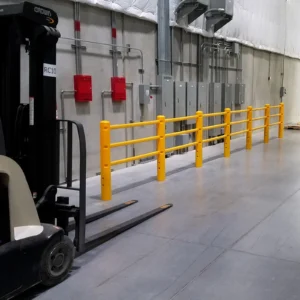
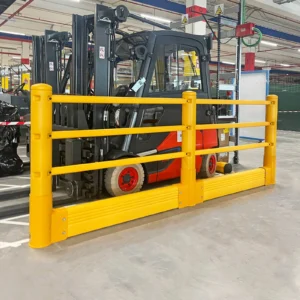
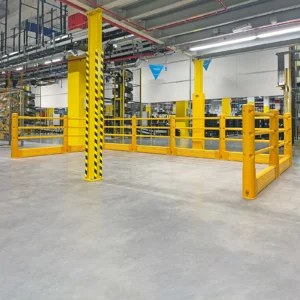
SVL supplies industrial safety barriers and warehouse protection systems designed to separate people from workplace vehicles and shield racking, columns, equipment and building infrastructure from impact. The range includes flexible guardrails, pedestrian barriers, rack-end protection, safety bollards, column protectors, handrails, ground-level barriers and temporary access-control systems for warehouses, factories, distribution centres, logistics facilities and busy back-of-house areas.
Every site has different vehicle routes, turning points, floor conditions and exposure levels. SVL can assess the working environment, recommend an appropriate protection layout, and provide nationwide supply and professional installation.
Request a Site Assessment
Choose Industrial Protection by Risk Area
Industrial barriers work best when each product is matched to a clearly identified hazard. Use this overview to narrow the choice, then open the relevant product page to check dimensions, fixing requirements and any verified test data.
| Risk Area |
Relevant SVL Products |
Typical Use |
| Pedestrian and vehicle segregation |
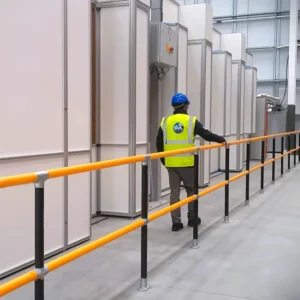
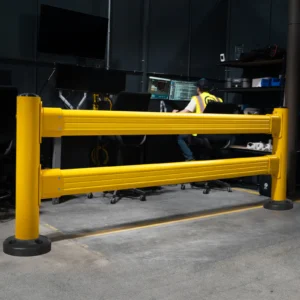
SafeStop Pedestrian Barrier, SafeStop Pedestrian Barrier with Ground-Level Protection and SafeStop Pedestrian Guardrail |
Creating protected walkways and separating people from forklifts or other material-handling vehicles |
| Vehicle routes and vulnerable boundaries |
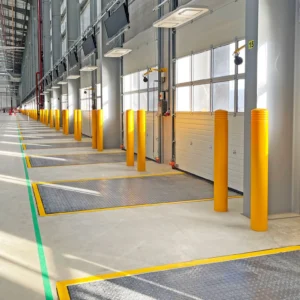
SafeStop Guardrail, SafeStop Ground Barrier, Flex+ Bollard, Flexcore Bollard and Safestop Bollard 15 |
Protecting walls, equipment, route edges, entrances and high-traffic impact points |
| Pallet-racking protection |
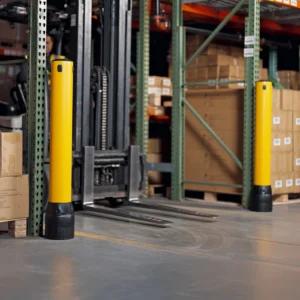
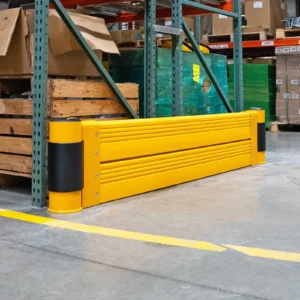
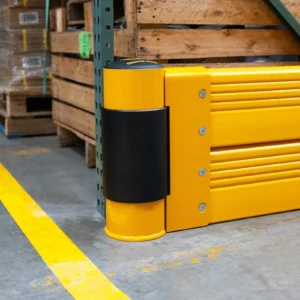
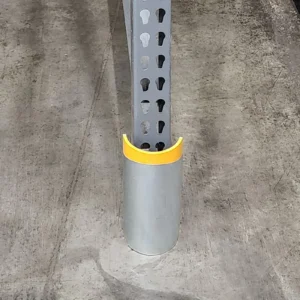
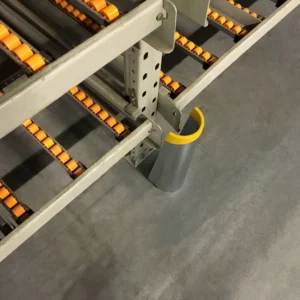
SafeStop Rack End Double, Shock Absorbing Rack Guards and Rack Mounted Guards |
Shielding exposed rack ends and uprights from pallet trucks, forklifts and glancing contact |
| Column and structural protection |
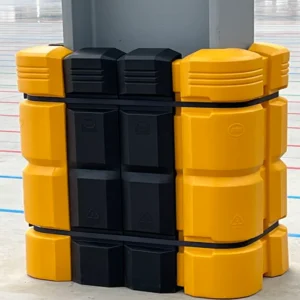
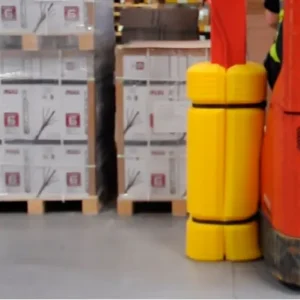
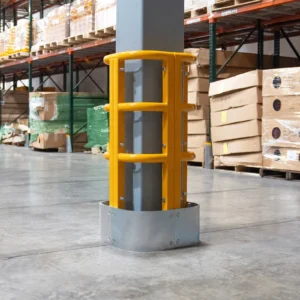
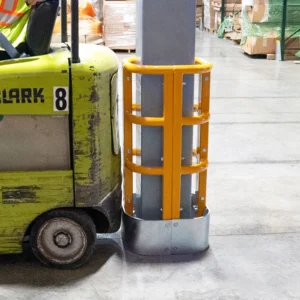
Column Wrap and Modular Column Protectors |
Protecting pillars, structural supports and exposed columns in vehicle operating areas |
| Essential equipment protection |
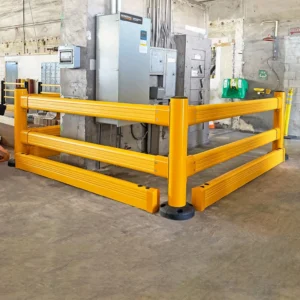
Systems Protector |
Creating a removable protective boundary around electrical, refrigeration, fire-safety and IT equipment |
| Pedestrian route definition |
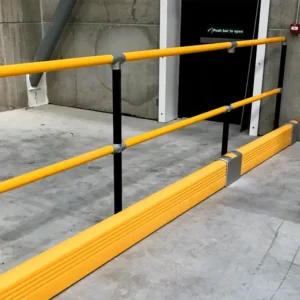
HR50 Handrail and Interclamp Handrail |
Defining walkways, safe zones, ramps and changes in level where a handrail system is appropriate |
| Temporary access restriction |
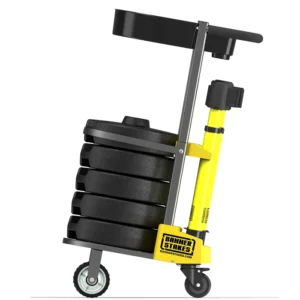
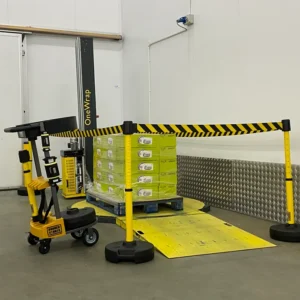
Banner Stakes Retractable Barriers |
Cordoning off temporary hazards, maintenance areas or restricted zones |
How to Select an Industrial Safety Barrier
Begin with the Hazard
Identify what could be struck and what creates the risk. A pedestrian walkway beside a forklift route requires a different solution from a rack upright, structural column, electrical cabinet or temporary maintenance area. The likely direction of contact and the space available for barrier deflection also matter.
Match the Barrier to the Vehicle
Forklifts, powered pallet trucks, walkie riders and manually moved equipment create different impact exposures. Vehicle weight, speed, load, approach angle and traffic frequency should inform the specification. Where defined impact resistance is required, use product-specific test information rather than assuming every barrier offers the same protection.
Distinguish Pedestrian Protection from Asset Protection
A low barrier may protect a wall or rack base but may not provide the height or configuration needed beside a pedestrian route. A handrail intended to guide people should not automatically be treated as a vehicle-impact barrier. Rigid protection can create a permanent boundary, while flexible or shock-absorbing systems are designed to manage impact through controlled movement. The correct option depends on the individual product and the assessed risk.
Check the Floor, Access and Layout
Many floor-mounted barriers require sound concrete and correctly specified anchors. Slab depth, edge distance, cracks, joints and underground services can affect installation. The finished layout must also preserve emergency routes, door operation, equipment servicing and normal material flow.
Applications for Warehouse and Industrial Barriers
SVL industrial protection systems can be configured for:
- warehouses and distribution centres;
- manufacturing and assembly facilities;
- logistics and fulfilment operations;
- pharmaceutical and food-production sites;
- loading, dispatch and goods-in areas;
- cold stores and back-of-house environments;
- plant rooms and critical equipment zones;
- pedestrian routes beside workplace traffic;
- pallet-racking aisles, columns and building approaches.
Where external traffic or heavier service-yard vehicles are involved, the project may also require Armco barriers, loading bay protection or safety bollards and posts. Convex mirrors can improve visibility at blind corners, while wall and corner protection can manage lower-level contact inside the facility.
For a broader planning overview, read SVL’s Guide to Warehouse and Industrial Safety.
From Site Survey to Installed Barrier System
SVL has specialised in impact protection and damage prevention since 2007, supporting industrial projects across Ireland.
During a survey, the team can examine traffic flow, turning areas, blind corners, rack ends, exposed columns, critical equipment and the condition of the proposed anchor points. This allows the barrier layout to address individual hazards rather than applying one product specification throughout the facility.
SVL can then coordinate product selection, layout, delivery and professional fitting as one project.
Discuss Your Industrial Barrier Project